Horse Galloping on a Tomato
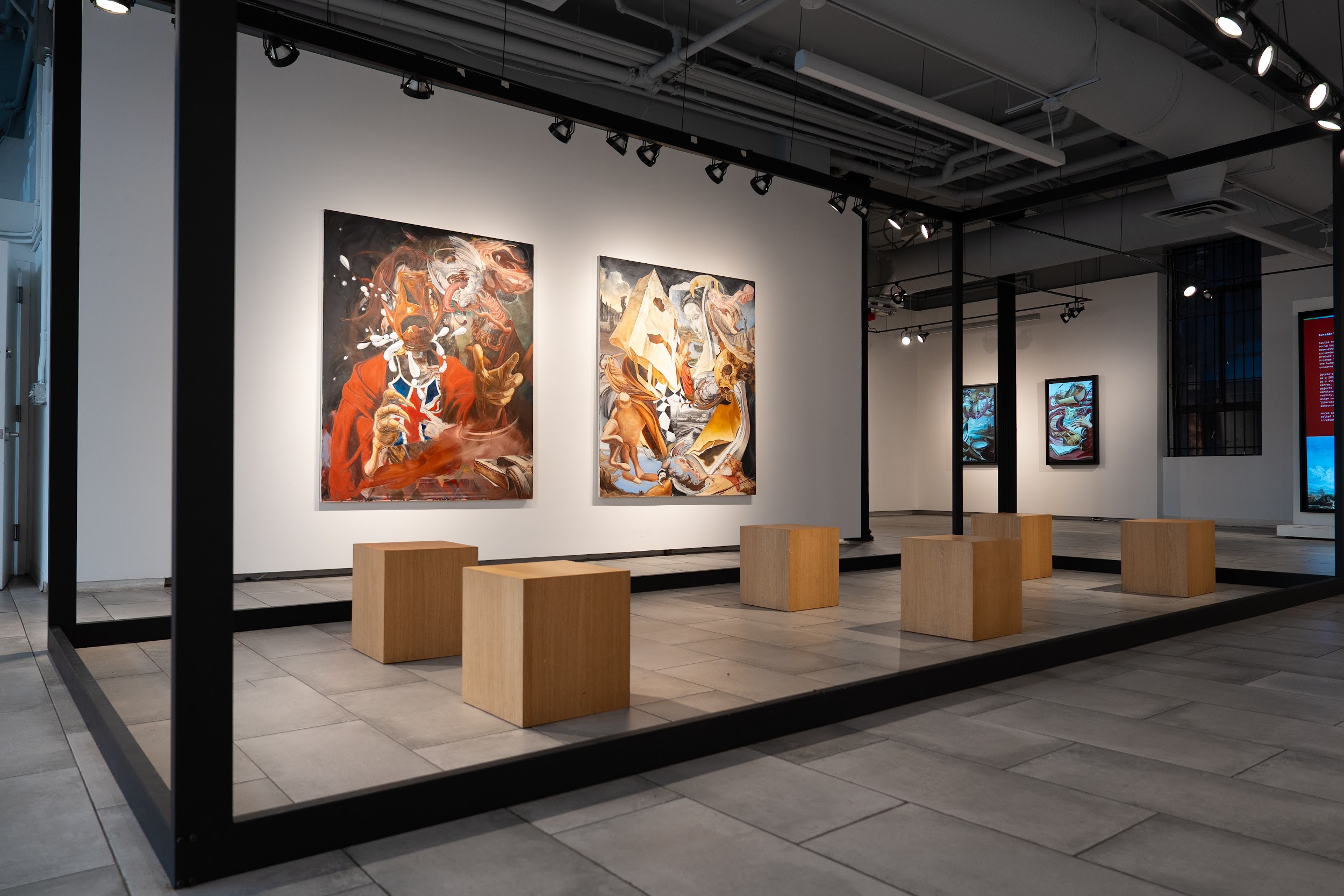
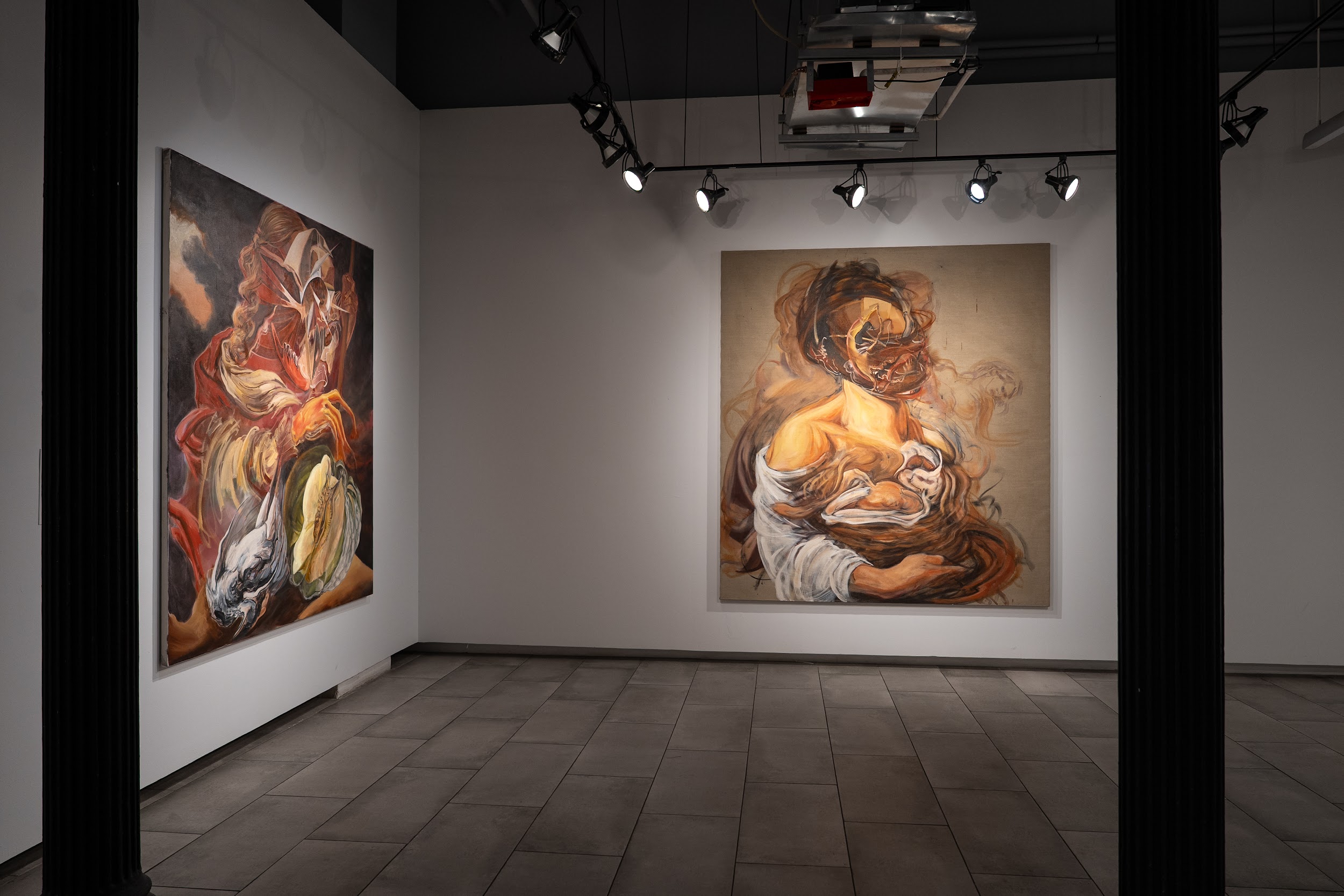
This solo exhibition of the Czech artist Tomas Jetela is an exploration of how contemporary concerns can be addressed through the ideological, as well as visual, aspects of Surrealism. Working predominantly in oil on large-scale canvas, Jetela builds expressive, almost visceral compositions that feel like they come from some otherworldly realm where objects hover in the air, and limbs have no beginning or end.
The title of the exhibition comes from a quote attributed to the “canonical” founder of Surrealism, André Breton, who claimed that “the man who cannot visualise a horse galloping on a tomato is an idiot.” One can only assume that Breton was pointing to the constrained imagination of the twentieth-century public, for whom absurdity, abstraction, and the illogical (the very pillars of Surrealism) felt radical, even disorienting, to say the least.
That said, today's society is by no means a stranger to the surreal. We live in a time where apples have, in fact, replaced human faces; where a sewing machine and an umbrella can meet on an operating table at the press of a big red button. Where even a child carries the power to summon entire realities with a device that fits into a back pocket. So how is it that Breton's quote still feels as relevant as ever?
Because we are facing a crisis of creativity.
Social media: what once felt like a way to bring the world together has now turned into a machine of desensitization. AI: What first appeared as a gift of convenience is now beginning to atrophy our ability to produce original thought. History has completed a strange loop in which imagination and the exploration of the human psyche have once again become urgent, central concerns.
Jetela’s paintings go beyond just referencing Surrealism as a 20th-century art movement, but also engage with it as a still-relevant approach. Standing before his canvas, where figures dissolve into landscapes, familiar objects are stripped of their logic, and the viewer is consistently denied the comfort of a stable pictorial reality, we are invited to lean into the surreal and align ourselves with a movement that once aimed to liberate the human mind and imagination from any constraints.
Horse Galloping on a Tomato is an ode to the stubborn belief that imagination must survive! no matter how irrational, nonrepresentational, or strange it becomes.