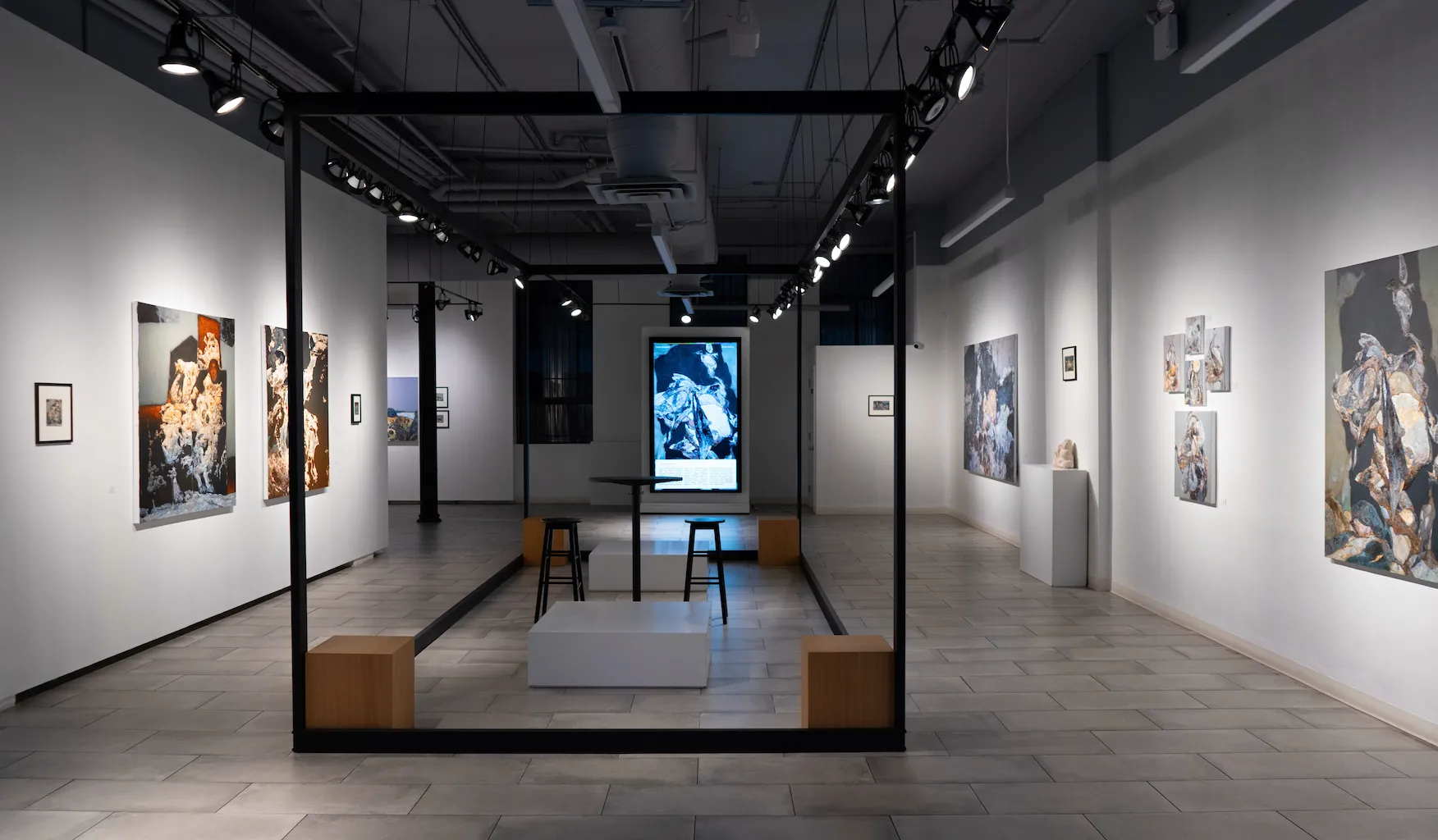
The Beast and the Sky
Solo Exhibition of Denis Sarazhin, curated by Aidana Bergali.
"The Beast and the Sky" explores the duality of the human as both beast and dreamer, tethered to the earth yet endlessly striving towards the sky — with this insatiable hunger fueled by our most beautiful and destructive weapon: the imagination.
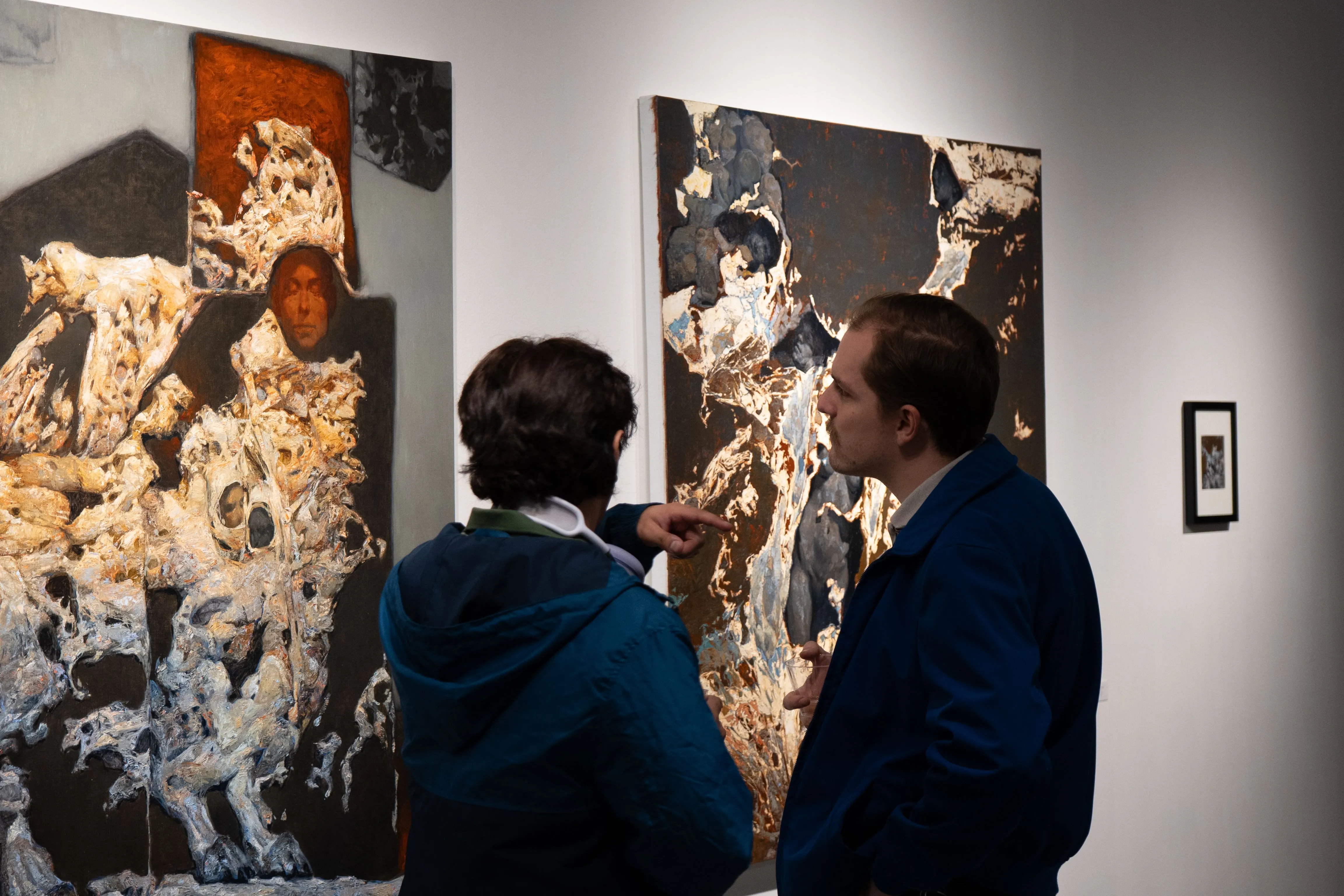
Sarazhin’s creations, oscillating between the beastly and the divine, the human and the transcendent, draw attention to the tension between instinct and violence, as well as the skyward impulse of myth, creativity, and progress. Skyward gazing here signifies not only the mortal ambition to touch the heavens, but also the human capacity to find order in abstraction — like tracing meaning in the shifting patterns of the blue tapestry above, whether for guidance or for wonder.
Like a medieval bestiary, which were once used to catalogue both real and imaginary creatures as bearers of symbolic meaning, part of this exhibition can also be perceived as an abstract bestiary cataloging wind collectors and guardians of forbidden orchards. The artist emphasizes the role of figurality within his abstraction: the absence of concrete objects, coexisting with a persistent sense of imagery, subsides barriers between viewers of different cultures and life experiences. Such purposeful openness provokes interpretation, inviting viewers to decipher their own visions, making them the constructors of a personal myth within each painting. Just as humanity once found beasts and gods in the stars and clouds. The result is a communal imaginative space that reminds us that imagination and empathy are inseparable and remain among humanity’s most integral traits.
The term “beast” becomes synonymous with all organic beings, suggesting at once the alien and the familiar, the frightening and the alive, the human and the animal. Such duality probes: Is humanity elevated above nature or forever inseparable from it? The ever-present tension between our creaturely instincts and our relentless hunger for the stars may suggest that progress itself may be a byproduct of our desire to deny our own animality. To feel less “beastly,” we have created monsters of our own — the machines of the modern age. In our pursuit of becoming gods, we risk destroying the very earth from which we came.
But does progress truly bring us closer to transcendence? And will the cost of finally reaching the stars be our humanity?